

Your agency grew. Your delivery model didn’t.
When agencies start out, the founders do everything – strategy, design, dev, account management, the occasional bug fix at 11pm. That model works when you’re small and scrappy. But as the agency grows, the math changes. Your best people become more valuable in strategy and client relationships than in execution. Your clients get bigger and more demanding. And the same web projects that used to be a healthy profit center start to feel like a quiet drain on the team.
This rarely shows up as a single crisis. It shows up as friction: you turn down web projects because they’ll eat your team. Quality varies depending on who happens to be free that week. Your senior people are stuck QA’ing builds instead of selling. And web margins look fine on paper but feel terrible in practice.
If any of that sounds familiar, you may have outgrown the delivery model that got you here. Below are the five signs we see most often in agencies that end up exploring a white-label web development partnership – and what changes when they make the switch.
You’re saying no to website projects (or quietly referring them out)
When an existing client asks for a redesign and your first instinct is “ugh, not right now,” that’s the sign. Either you take the project and stretch the team thin, or you refer it out – and lose both the revenue and a piece of the client relationship. Neither is great.
Most agencies don’t lose web work because they don’t want it. They lose it because they can’t deliver it well, on time, without burning out the team. A white-label web development partner lets you say yes to those projects without staffing up, and without compromising on quality.
Web work is pulling your team off their real strengths
Every agency has a center of gravity. Maybe it’s a brand strategy. Maybe it’s paid media. Maybe it’s content or PR. Whatever it is, that’s why your best clients hired you.
But when web projects come in, they pull people off that center of gravity. Strategists become QA reviewers. Designers spend hours fixing dev tickets. Account managers chase missing assets and login credentials. The work gets done – but the output that actually drives your agency’s reputation suffers, and the clients eventually feel it.
White-labeling web execution frees your senior people to focus on the work that wins and keeps clients. The build still happens. It just doesn’t happen at the cost of everything else.
Quality is inconsistent across projects
Internal delivery quality usually depends on who’s available that month. A great senior developer produces a great build; a junior under pressure produces something that mostly works but isn’t proud-worthy. Over time, your portfolio becomes uneven – some sites you’d happily lead with in a pitch, others you quietly skip.
Inconsistency hurts more than a single bad project. It makes it harder to sell at premium rates, because you can’t confidently promise a quality level you can’t reliably deliver. A dedicated white-label partner brings a standardized process to every project – which means the floor of your work rises, not just the ceiling.
Your clients are asking for things your team can’t deliver
Growth-stage clients have growth-stage demands. They want advanced WordPress builds with custom post types and ACF, not template sites. They want pixel-perfect design in Elementor, not “close enough.” They want fast, secure, SEO-clean architecture, and an editing experience their internal teams can actually use without breaking the site.
If your in-house or freelance setup wasn’t built for this complexity, you have two bad options: turn down sophisticated work, or take it and underdeliver. A white-label partner with deep technical specialization closes that gap – your clients get the level of work they’re expecting, presented under your brand.
The math on hiring doesn’t work anymore
Hiring more developers feels like the obvious move, until you actually run the numbers. A senior WordPress developer comes with a full salary, benefits, management overhead, and the very real cost of a hiring misfire – all fixed costs that don’t flex with your pipeline. And once you’ve made the hire, they need a steady volume of web work to justify their seat every month, which means your agency is now committed to selling that work whether or not it fits your strategy.
A white-label partnership converts that fixed cost into a variable one. You pay per project, scale up or down with your pipeline, and don’t carry the salary risk through slow quarters. For most growth-stage agencies, the unit economics work out dramatically better.
What changes when you white-label web development with the right partner
The wrong white-label partner is a vendor – fast on volume, slow on care, generic on output. The right partner functions as your delivery team: invisible to your client, deeply aligned with your standards, and bringing enough process discipline that your agency looks better than it would alone.
At Santos Digital, we work with agencies as a behind-the-scenes web development team. Your client never sees us. They see your agency delivering at a level you couldn’t economically deliver in-house.
How our white-label process works
Most website rebuilds go sideways for the same reason: the team starts designing before everyone agrees on what the website is supposed to say. We’ve built our process to eliminate that risk from the first phase, which means fewer revision rounds, fewer scope arguments, and predictable timelines you can confidently promise to your clients.
- Discovery & Consultation. We start with your client’s business, not their old website. What’s the positioning, who are the best clients, what’s the goal of the rebuild. You bring the relationship; we bring the technical and design diagnostic. You can either join discovery calls or hand us a brief – whichever fits your agency’s workflow better.
- Concept & Prototyping – three distinct homepage directions. This is the move that separates our process from most agencies you’ve worked with. Instead of delivering one homepage concept and hoping your client likes it, we present three distinct directions, each with a different angle on positioning, structure, and visual identity. Your client picks the direction that best represents where their business is going. That means you walk into the approval meeting with options, not a single bet – a much stronger conversation, and one that dramatically reduces revision cycles in the phases that follow.
- Full Design & Development. Once the homepage direction is approved, we design the rest of the site against that standard while building the homepage in parallel. The visual and structural system is already set, so there’s no guessing about how internal pages should feel.
- Web Development & QA. With the design locked in, we develop the remaining pages, test across devices, and handle technical optimization – speed, security, SEO foundations, and an editing experience that your client’s team can actually use without calling support for every change.
- Launch, Support & Maintenance. Full review, go-live, and ongoing support – all under your agency’s brand. We can stay invisible to the end client and communicate only through you, or we can plug into your project management tools and operate as a named extension of your team. Your call, and we’ll adapt to whichever model your agency prefers.
The quality bar
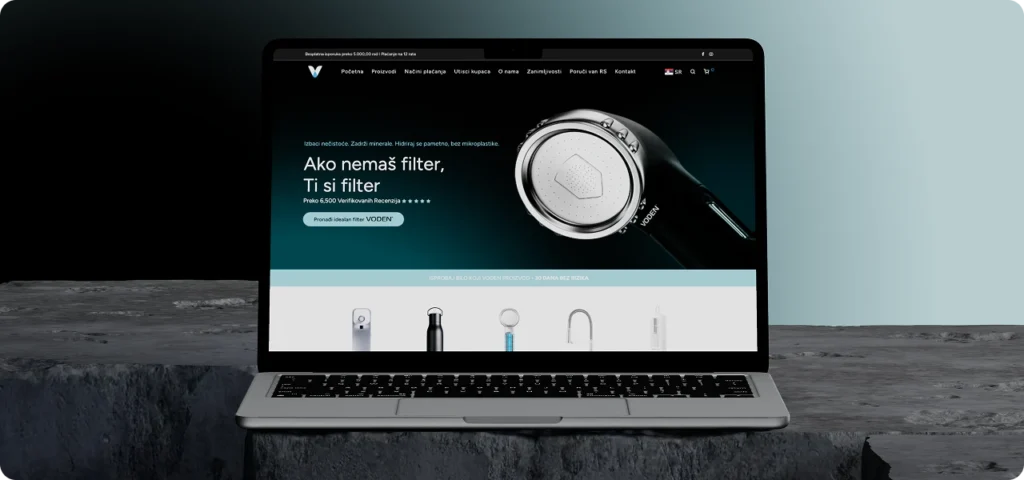
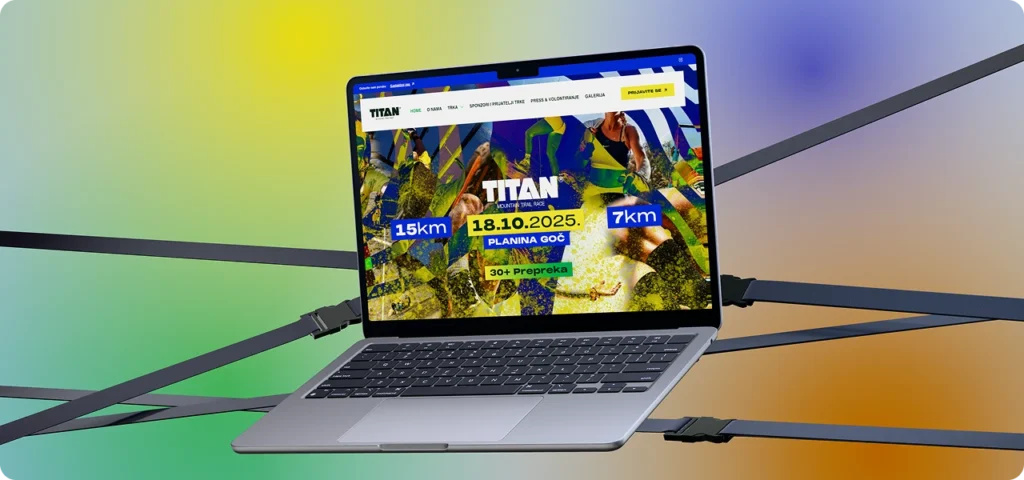
The most useful thing we can show prospective agency partners isn’t a sales deck – it’s the actual work. A recent project for Vitaccess, a real-world evidence services provider for pharmaceutical and biotechnology companies, is a representative example. We rebuilt their website around a WordPress custom post type architecture – separate templates for webinars, publications, white papers, study datasets, and case studies – so their non-technical team could publish independently without ever booking a developer.
That’s the standard your agency’s clients get when they work with a white-label partner that takes the technical layer seriously. You can browse more examples in our portfolio and case studies.
Is white-labeling right for your agency?
It usually is, in one of three situations:
- You’re turning down web projects you would otherwise take
- You’re taking web projects but they’re hurting your team, your timelines, or your margins
- You want to add web as a service line without building a full in-house dev team
If two of those describe your agency right now, the cost of staying the same is almost always higher than the cost of a partnership conversation.
Get in touch with our team and let’s talk about what a white-label partnership with Santos Digital would look like for your agency. We’ll review your typical project profile, your current capacity gaps, and how our process would slot into your client delivery – branded as yours, end to end.